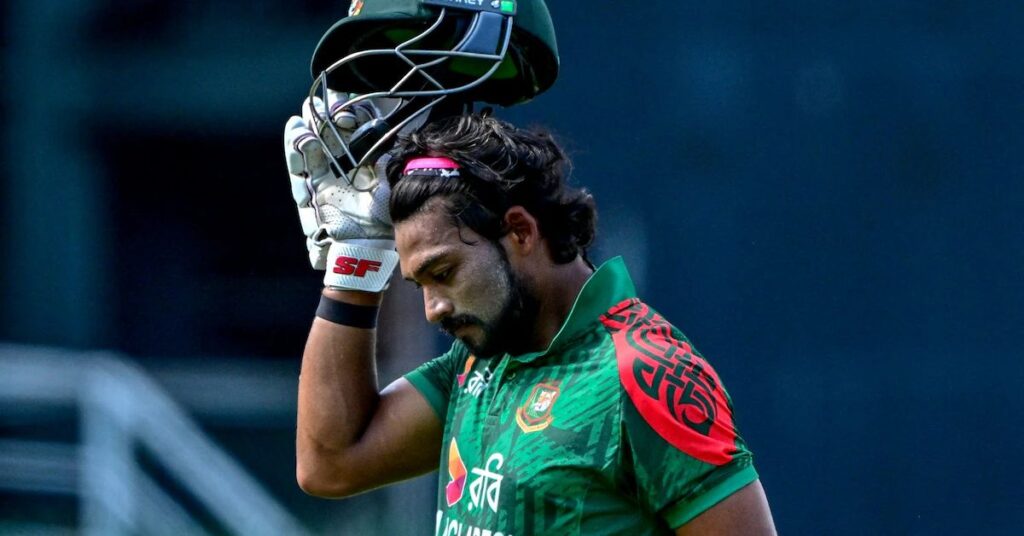

The ongoing controversy surrounding Bangladesh’s participation in the ICC Men’s T20 World Cup 2026 has taken another significant turn after a senior Bangladesh cricketer publicly clarified the players’ stance amid the growing standoff between the Bangladesh Cricket Board (BCB) and the International Cricket Council (ICC). While administrators and officials continue to negotiate behind closed doors, the players’ perspective—long missing from the debate—has now come into sharp focus.
With uncertainty surrounding match venues, security concerns, and diplomatic tensions, the Bangladesh star’s statement has added an important human dimension to what has largely been an administrative and political issue. This blog explores the background of the controversy, the ICC-BCB dispute, the player’s comments, reactions from across the cricketing world, and what this all means for the future of the T20 World Cup.
Background: The ICC–Bangladesh T20 World Cup Dispute
The ICC Men’s T20 World Cup 2026, scheduled to be jointly hosted by India and Sri Lanka, was expected to be a celebration of global cricket. However, preparations have been disrupted after Bangladesh expressed its reluctance to play its scheduled matches in India, citing security and political concerns.
Bangladesh was originally drawn to play several group-stage fixtures in Indian cities. The Bangladesh Cricket Board later communicated to the ICC that it was not comfortable sending the national team to India and requested that its matches be shifted to Sri Lanka, the tournament’s co-host.
The ICC, however, has maintained that the tournament schedule was finalised after extensive planning and security assessments, and that last-minute changes could undermine the integrity of the competition.
The Row Escalates: ICC vs BCB
What began as a logistical concern soon evolved into a broader dispute. The ICC reportedly set deadlines for Bangladesh to confirm its participation under the existing schedule, warning of possible consequences such as forfeited matches or disciplinary action.
The BCB stood firm, insisting that its decision was based on player safety and national considerations, not competitive advantage. The situation escalated further when the Pakistan Cricket Board publicly backed Bangladesh’s position, intensifying pressure on the ICC.
Amid this administrative tug-of-war, the voices of the players themselves remained largely unheard—until now.
Bangladesh Star Breaks Silence
Amid mounting speculation, a prominent Bangladesh cricketer stepped forward to clarify where the players stand in the midst of the ongoing controversy. Speaking to the media, the star made it clear that the players are eager to play in the T20 World Cup and are focused on representing their country on the world stage.
“As players, we always want to play in big tournaments like the T20 World Cup. Wearing the national jersey and competing at the highest level is our priority.”
This statement immediately drew attention, as it contrasted with the board’s firm administrative stance and highlighted a potential disconnect between players and policymakers.
Players vs Administration: A Common Cricketing Dilemma
Such situations are not uncommon in international cricket. Players often find themselves caught between:
- Administrative decisions
- Government policies
- Security assessments
- Diplomatic considerations
For the players, however, the focus remains squarely on competition, preparation, and performance. The Bangladesh star’s comments underscore that the dressing room remains mentally committed to the tournament, regardless of external uncertainties.
What the Players Are Really Saying
While the Bangladesh star clarified that players are keen to participate, the statement was also measured and respectful of authority. There was no open criticism of the BCB or ICC—only a reaffirmation of the players’ professional commitment.
Key takeaways from the players’ stance include:
- Players want clarity as early as possible
- Uncertainty affects preparation and mindset
- Representing Bangladesh remains the top priority
- Safety and well-being are important, but so is competition
The tone suggested unity rather than rebellion, emphasizing professionalism in a politically sensitive environment.
Impact of Uncertainty on Player Preparation
T20 World Cups demand meticulous preparation, including:
- Match simulations
- Venue-specific training
- Adaptation to conditions
- Mental conditioning
The ongoing uncertainty has reportedly made it difficult for Bangladesh players to plan effectively. Training schedules, travel plans, and even strategic preparation depend heavily on knowing where matches will be played.
The player’s comments can be seen as a subtle appeal for swift resolution, allowing cricketers to focus purely on cricket.
Reactions From the Cricketing World
The Bangladesh star’s statement has triggered widespread reaction:
Former Cricketers
Several former international players have expressed sympathy for the players, noting that:
- Athletes often bear the consequences of administrative disputes
- Prolonged uncertainty can impact performance
- Players deserve transparency and timely decisions
Fans
Bangladesh fans have largely supported the players’ desire to compete, while also respecting concerns around safety and national policy.
Media Analysts
Analysts see the statement as a balanced and mature response, avoiding confrontation while still making the players’ position clear.
The ICC’s Challenge: Balancing Authority and Empathy
From the ICC’s perspective, the situation presents a complex challenge:
- Maintaining tournament integrity
- Respecting member board concerns
- Ensuring player safety
- Avoiding political escalation
The players’ comments add another layer, reminding the ICC that beyond regulations and schedules, human aspirations are at stake.
Bangladesh’s Cricketing Ambitions in T20 World Cup 2026
Bangladesh enters the 2026 T20 World Cup with renewed ambition. Over the past few years, the team has:
- Developed a stronger T20 core
- Improved bench strength
- Gained experience in global leagues
- Focused on aggressive modern cricket
Missing or compromising participation in such a tournament would be a major setback for the players’ careers and the country’s cricketing progress.
Mental Pressure on Players
Elite athletes thrive on rhythm and clarity. The current situation has placed Bangladesh players under:
- Mental stress due to uncertainty
- Media scrutiny
- Fan expectations
- Performance pressure
The Bangladesh star’s calm and composed statement reflects mental resilience, but prolonged ambiguity could still take its toll.
Historical Parallels in International Cricket
Cricket history is filled with similar moments where players have been caught in the crossfire of politics and administration:
- Neutral venues for Pakistan
- Hybrid hosting models in Asia Cups
- Withdrawals and boycotts in earlier decades
In many cases, players have voiced a desire to play, even when boards have hesitated. This situation follows a familiar pattern, once again highlighting the delicate balance between sport and state.
Could This Influence the ICC’s Decision?
While player statements alone may not dictate policy, they add moral and emotional weight to the debate. The ICC may take into account:
- Players’ willingness to participate
- Impact on careers and team morale
- Public perception of fairness
The players’ stance could encourage a compromise solution, such as venue adjustments or expanded hybrid arrangements.
What Happens If the Deadlock Continues?
If the row remains unresolved, possible outcomes include:
- Venue Reallocation
Bangladesh’s matches could be shifted to Sri Lanka. - Conditional Participation
Bangladesh could play under specific security arrangements. - Administrative Sanctions
In a worst-case scenario, forfeits or disciplinary measures could be enforced. - Last-Minute Resolution
Most likely, a negotiated settlement will emerge to avoid embarrassment for all parties.
Why the Player’s Voice Matters
The Bangladesh star’s comments serve as a reminder that cricket is ultimately played by individuals with dreams, careers, and limited windows of opportunity. T20 World Cups do not come around often, and missing one can have long-term consequences.
By speaking up calmly and professionally, the player has:
- Humanised the controversy
- Reduced speculation about player dissent
- Reaffirmed commitment to national duty
Fans Hope for Cricket to Win
Across South Asia and beyond, fans are hoping that the situation is resolved quickly and amicably. Cricket lovers want to see the best teams and players compete without distraction.
The Bangladesh star’s message aligns with that sentiment—play cricket, compete fairly, and let the game take centre stage.
Conclusion: A Clear Message From the Dressing Room
The Bangladesh star’s clarification of the players’ T20 World Cup stance has brought much-needed clarity amid an increasingly complex ICC-BCB dispute. While administrators debate logistics and policy, the players have made one thing clear: they want to play, compete, and represent their country on the world stage.
As the ICC prepares to take a final call, the players’ voices serve as a powerful reminder of what is truly at stake. The hope now is that dialogue, compromise, and common sense prevail—allowing the 2026 T20 World Cup to proceed with its full competitive spirit intact.
Because in the end, cricket is at its best when the focus remains where it belongs—on the field.