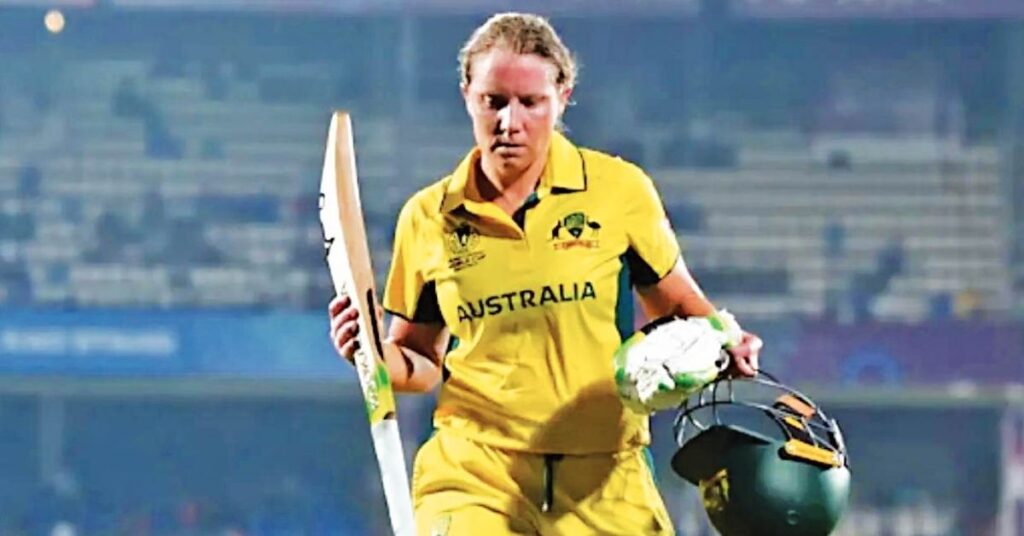

The retirement of Alyssa Healy marks the end of an era in women’s cricket and provides a moment of reflection on how far women’s sport has come. As one of the most influential players in the modern game, Healy’s decision to step away coincides with new analysis that highlights the sustained strength, growth, and commercial stability of women’s sport across the world.
Alyssa Healy’s retirement is not just a personal milestone; it is a symbolic moment that represents the transition of women’s sport into a mature, competitive, and globally respected ecosystem. While legends retiring often raise questions about gaps and rebuilding phases, current data and performance metrics suggest that women’s sport is not slowing down. Instead, it is entering a phase of sustained excellence and long-term growth.
This blog explores Alyssa Healy’s career, the impact of her retirement, and how new analysis confirms the continued strength of women’s sport at both elite and grassroots levels.
Alyssa Healy: A Career That Redefined Women’s Cricket
Alyssa Healy’s name is synonymous with innovation, aggression, and leadership in women’s cricket. Over the years, she transformed the role of a wicketkeeper-batter and set new benchmarks for performance in international cricket.
From explosive opening partnerships to record-breaking centuries in World Cups and Ashes series, Healy consistently pushed the boundaries of what was considered possible in the women’s game. Her fearless approach helped shift perceptions and inspired a generation of young cricketers to play with freedom and confidence.
Healy’s ability to dominate bowlers, combined with her sharp wicketkeeping skills, made her one of the most complete players of her era. Her retirement brings an end to a chapter that played a significant role in elevating the global profile of women’s cricket.
The Timing of Alyssa Healy’s Retirement
The timing of Alyssa Healy’s retirement is particularly noteworthy. Unlike earlier eras, when retirements of star players often exposed structural weaknesses in women’s sport, Healy steps away at a time when the sport is stronger than ever.
New analysis across multiple women’s sports shows:
- Increased participation at youth levels
- Stable and growing broadcast revenues
- Expanded domestic leagues
- Strong international competition depth
This context ensures that while Healy’s presence will be missed, the system she helped strengthen is capable of producing the next generation of stars.
Impact of Alyssa Healy on Women’s Cricket Culture
Alyssa Healy did more than score runs and take catches. She changed the culture of women’s cricket by normalising aggressive intent and high expectations.
Her approach encouraged teams to:
- Attack from the first ball
- Prioritise fitness and athleticism
- Embrace professional standards
- Believe in competing with confidence
This cultural shift has had a lasting effect. Today’s women cricketers grow up watching players like Healy and see aggressive, high-quality cricket as the norm rather than the exception.
New Analysis Highlights Sustained Strength in Women’s Sport
Recent analysis across women’s sport paints a positive picture. Instead of relying on individual stars, modern women’s sport benefits from depth, structure, and institutional support.
Key findings from new data include:
- Women’s international matches attracting consistent global viewership
- Domestic leagues showing steady growth in attendance and sponsorship
- Increased investment from governing bodies and private partners
- Improved performance standards across teams
This sustained strength means that retirements like Alyssa Healy’s do not weaken the sport. Instead, they create space for new talent to emerge within a stable framework.
Women’s Cricket After Alyssa Healy
In cricket, the question after any major retirement is simple: what happens next? In the case of Alyssa Healy, the answer appears reassuring.
Australia’s women’s cricket system continues to produce high-quality wicketkeeper-batters and aggressive top-order players. Domestic competitions, academies, and talent pathways are well established, ensuring continuity.
Globally, other teams have also closed the gap, creating a more competitive international landscape. This competitiveness is a direct result of the professional standards players like Healy helped establish.
Commercial Growth and Media Presence in Women’s Sport
One of the most significant indicators of sustained strength in women’s sport is commercial stability. Analysis shows that women’s sport is no longer dependent on one-off events or star power alone.
Key commercial trends include:
- Long-term broadcast deals
- Dedicated women’s sports sponsors
- Increased digital and social media engagement
- Growing merchandise sales
Alyssa Healy played during the transition period when women’s sport moved from limited visibility to mainstream recognition. Her retirement comes at a time when that visibility is firmly established.
Leadership Legacy of Alyssa Healy
Leadership is often overlooked when discussing individual performance, but Alyssa Healy’s leadership impact has been substantial. Whether as a senior player or a guiding presence in the dressing room, she set standards for professionalism and accountability.
Her leadership helped:
- Smooth transitions during team changes
- Support younger players entering international cricket
- Reinforce a winning mindset
- Maintain high performance standards
This leadership legacy ensures that even after her retirement, the values she championed remain embedded within the team environment.
Strength of Women’s Domestic Leagues
Domestic leagues play a crucial role in sustaining women’s sport. Analysis shows that well-structured domestic competitions are the backbone of long-term success.
In cricket, leagues such as professional women’s T20 tournaments have:
- Increased match frequency
- Improved player earnings
- Provided global exposure
- Enhanced competitive standards
These leagues ensure that talent development does not rely solely on international cricket. Alyssa Healy’s career benefited from this evolution, and her retirement does not disrupt the system.
Global Competitiveness in Women’s Sport
Another key takeaway from recent analysis is the increasing competitiveness across nations. Where once a handful of teams dominated women’s sport, the gap has narrowed significantly.
In women’s cricket:
- Emerging teams are winning against traditional powerhouses
- Young players are performing under pressure
- Tactical and fitness standards have improved globally
This competitiveness strengthens the sport as a whole and ensures that no single retirement undermines its overall quality.
Role of Data and Analysis in Women’s Sport Growth
Modern analysis has played a vital role in the sustained strength of women’s sport. Performance data, fitness tracking, and strategic insights have improved preparation and reduced reliance on individual brilliance.
Teams now focus on:
- Long-term player development
- Injury prevention and workload management
- Tactical adaptability
- Mental conditioning
Alyssa Healy’s later years coincided with this analytical shift, allowing her to extend her career and maintain performance levels while contributing to team success.
Inspiring the Next Generation
Perhaps the most lasting impact of Alyssa Healy’s career is inspiration. Young athletes now grow up seeing women’s sport as a viable, respected, and rewarding career path.
This inspiration translates into:
- Increased grassroots participation
- Stronger junior competitions
- Greater diversity in talent pools
- Improved long-term sustainability
New analysis confirms that participation rates in women’s sport continue to rise, ensuring a steady flow of talent for years to come.
Challenges That Still Remain
While the outlook is positive, sustained strength does not mean the absence of challenges. Women’s sport still faces issues such as:
- Pay parity debates
- Scheduling conflicts
- Resource distribution
- Media coverage consistency
However, the systems in place today are better equipped to address these challenges than ever before. The progress made during Alyssa Healy’s career provides a strong foundation for continued improvement.
Alyssa Healy’s Retirement as a Positive Transition
Retirements often signal uncertainty, but Alyssa Healy’s retirement represents a positive transition rather than a decline. It highlights the maturity of women’s sport, where systems are stronger than individuals.
This transition allows:
- New leaders to emerge
- Fresh tactical approaches
- Continued evolution of playing styles
- Broader representation of talent
Women’s sport is no longer defined by single names. Instead, it thrives on collective strength.
What the Data Tells Us About the Future
The latest analysis paints a clear picture of the future of women’s sport:
- Growth is steady, not temporary
- Performance standards are rising
- Commercial interest is sustainable
- Global competition is healthy
These indicators suggest that the momentum built over the past decade will continue, regardless of individual retirements.
Conclusion: A Legacy Beyond Records
Alyssa Healy retires not just as a great player, but as a symbol of progress in women’s sport. Her career coincided with a period of transformation, and her influence helped shape the modern landscape.
As new analysis shows sustained strength across women’s sport, Healy’s retirement serves as proof that the foundations are strong. The systems, structures, and talent pipelines she was part of are now capable of supporting the next generation.
Women’s sport is no longer growing in short bursts. It is evolving steadily, confidently, and sustainably. Alyssa Healy’s legacy will not fade with her retirement; it will continue through the players, teams, and competitions that define the future.