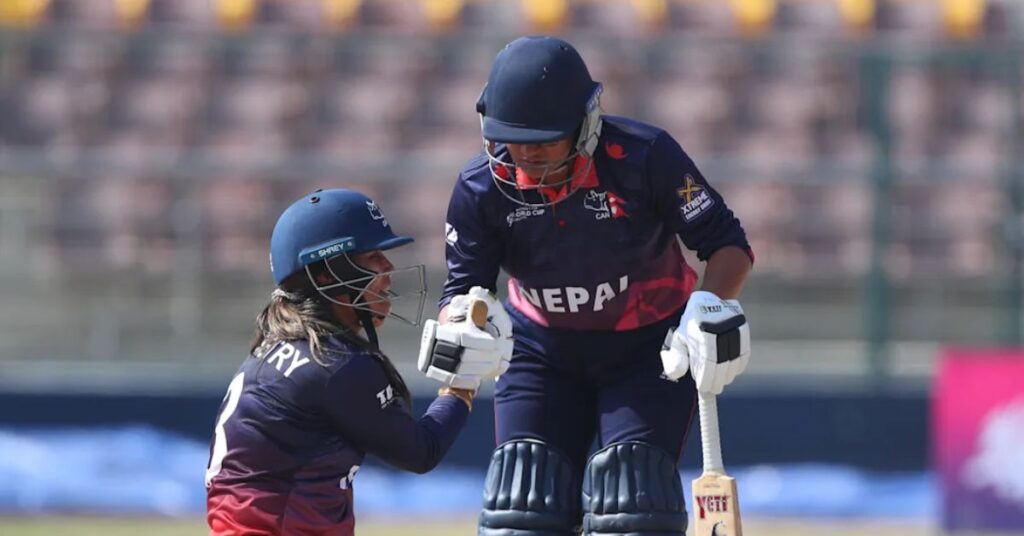

Despite a challenging start to their Women’s T20 World Cup Qualifier campaign, Nepal remain firmly committed to their dream of reaching the global stage. Two early losses on home soil may have dented their momentum, but they have not broken the spirit of a team that has come a long way in a short span of time.
For Nepal’s women’s cricket team, this qualification journey is about more than just wins and losses. It is about belief, growth, and the determination to compete against stronger, more experienced sides. Playing in front of home supporters adds both pressure and motivation, and while results have not yet gone their way, Nepal continue to look ahead with optimism and resilience.
The Importance of the Women’s T20 World Cup Dream
For emerging cricket nations like Nepal, the Women’s T20 World Cup represents more than qualification—it symbolises recognition, opportunity, and progress.
Reaching the World Cup would:
- Elevate women’s cricket in Nepal
- Inspire a new generation of female cricketers
- Attract greater support and resources
- Validate years of grassroots development
Even the qualifier stage itself is a vital stepping stone in that journey.
Home Soil Pressure and Opportunity
Hosting the qualifier on home soil brings unique challenges. While familiar conditions and local support can be advantageous, they also increase expectations.
For Nepal:
- Crowds bring encouragement and emotion
- Conditions are familiar but not always forgiving
- Pressure to perform can weigh heavily
The two early defeats have tested the team’s composure, but they have also provided valuable lessons.
A Tough Start, But Not the End
Starting a qualification campaign with two losses is never ideal. However, in a multi-team, multi-match format, early setbacks do not automatically end qualification hopes.
Nepal understand that:
- Momentum can change quickly
- One strong performance can reignite belief
- Other results may still open doors
Remaining mathematically and mentally alive is key.
Assessing Nepal’s Performances So Far
While the scoreboard shows defeats, Nepal’s performances have included moments of promise.
Competitive Phases
In both matches, Nepal showed they could:
- Compete for extended periods
- Apply pressure with disciplined bowling
- Display flashes of confident batting
These phases suggest the gap between Nepal and stronger teams is narrowing.
Where Matches Slipped Away
Key areas that cost Nepal included:
- Losing clusters of wickets
- Struggling to accelerate in the middle overs
- Inexperience in closing tight phases
These are common challenges for developing teams and can improve with exposure.
Growth of Women’s Cricket in Nepal
Nepal’s presence in the qualifier itself highlights the progress of women’s cricket in the country.
Over recent years:
- Participation at grassroots level has increased
- Domestic structures have improved
- Young players have gained international exposure
This campaign is part of a broader development curve, not an isolated event.
The Mental Challenge of Qualification Cricket
Qualifier tournaments are as much mental tests as technical ones.
Players must deal with:
- Short recovery times
- Emotional highs and lows
- Pressure of limited opportunities
Nepal’s ability to stay positive after two losses reflects growing mental resilience.
Leadership and Team Culture
One of Nepal’s biggest strengths is their team culture.
Leadership within the squad has focused on:
- Keeping communication clear
- Encouraging younger players
- Emphasising learning over fear
This approach helps prevent panic and allows players to perform with freedom.
Why Nepal Are Not Giving Up
Nepal’s refusal to give up stems from several factors:
Belief in Potential
The team knows they are capable of better performances than what the results show so far.
Support System
Strong backing from coaches, administrators, and fans reinforces confidence.
Long-Term Vision
Qualification is the goal, but development remains the priority.
Home Crowds: Fuel, Not Pressure
Playing at home means every run and wicket is shared with passionate supporters.
While expectations are high, Nepal’s players see the crowd as:
- Motivation to fight harder
- Energy during difficult moments
- A reminder of why they play
Learning to channel this support positively is part of their growth.
Key Areas Nepal Can Improve
To revive their qualification campaign, Nepal will focus on specific areas.
Batting Partnerships
Building longer partnerships can:
- Stabilise innings
- Reduce pressure on lower order
- Improve totals or chase consistency
Middle-Overs Strategy
T20 matches are often decided in the middle overs. Nepal need:
- Better rotation of strike
- Selective aggression
- Reduced dot-ball pressure
Fielding Efficiency
In tight matches, fielding can be decisive. Improving:
- Catching consistency
- Ground fielding
- Throwing accuracy
could save crucial runs.
The Role of Young Players
Nepal’s squad features several young players gaining valuable exposure.
These players:
- Are learning to handle international pressure
- Bring energy and fearlessness
- Represent the future of Nepalese women’s cricket
Their development is a major positive outcome of this qualifier.
Experience Gap: A Reality, Not a Barrier
Many teams in the qualifier possess:
- More international matches
- Professional league exposure
- Established player pipelines
Nepal’s experience gap is real, but not permanent. Each match reduces that gap.
Why Qualification Is Still Possible
Despite two losses, Nepal’s campaign is not over.
Several factors keep hope alive:
- Remaining matches still offer points
- Other teams can take points off each other
- Net run rate can be managed
In qualifiers, scenarios can shift rapidly.
Learning From Defeat: A Crucial Skill
Strong teams are built by responding to losses constructively.
Nepal are focusing on:
- Reviewing mistakes honestly
- Avoiding blame culture
- Applying lessons immediately
This growth mindset is essential for long-term success.
Women’s Cricket in Nepal: Beyond This Tournament
Regardless of qualification outcome, this campaign contributes to:
- Greater visibility for women’s cricket
- Increased participation at youth level
- Strengthened case for investment
The impact extends far beyond this qualifier.
The Emotional Side of the Dream
For many players, the Women’s T20 World Cup dream is deeply personal.
It represents:
- Years of sacrifice
- Breaking social barriers
- Proving that women’s cricket belongs on the big stage
That emotional connection fuels their refusal to give up.
What Success Looks Like Right Now
Success for Nepal at this stage may include:
- Competitive performances
- Individual breakthroughs
- Clear improvement match to match
World Cup qualification is the ultimate aim, but progress has many forms.
Inspiration for the Next Generation
Young girls watching this qualifier see:
- Players representing Nepal proudly
- Opportunities to play international cricket
- A pathway that did not exist years ago
This inspiration may be the campaign’s greatest legacy.
Staying Present, Not Overwhelmed
Nepal’s focus is now on:
- One match at a time
- One over at a time
- One decision at a time
Avoiding the weight of “what if” scenarios helps maintain clarity.
Support From the Cricket Community
Nepal’s campaign has drawn support from:
- Local fans
- Former players
- Regional cricket followers
Such support strengthens belief during challenging moments.
Why Resilience Matters More Than Results
In developing cricket nations, resilience is the foundation of progress.
Nepal’s willingness to continue fighting despite setbacks shows:
- Growing maturity
- Strong team identity
- Commitment to the long journey
These traits often precede success.
The Bigger Picture: Nepal’s Cricketing Journey
Nepal’s women’s team is part of a broader national cricket movement that has:
- Overcome resource limitations
- Built talent through determination
- Earned global respect gradually
This qualifier is another chapter in that journey.
Remaining Matches: Opportunity Awaits
Every remaining match offers:
- A chance to reset
- An opportunity to surprise opponents
- A platform to express fearless cricket
Nepal approach these games with belief, not resignation.
Conclusion: The Dream Lives On
Nepal may have started their Women’s T20 World Cup Qualifier campaign with two losses, but they are far from giving up on their dream. On home soil, surrounded by passionate supporters, this team continues to believe in growth, learning, and possibility.
Qualification dreams are not defined by perfect starts—they are shaped by resilience, courage, and refusal to surrender. Nepal’s journey reflects all three.
As the tournament progresses, results will tell one story. But the deeper story—the rise of Nepal’s women’s cricket, the belief built under pressure, and the inspiration created—will endure long after the final ball is bowled.
And for Nepal, the Women’s T20 World Cup dream remains alive, burning brighter with every challenge faced and every lesson learned.